
Under a Volcano/Canner’s Special in SF and Beyond
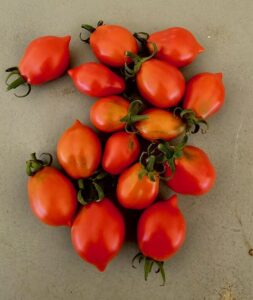
Dry-Farmed Piennolo tomatoes are so good. They taste great and if you don’t use them all at once they hang out in splendid shape for a long time. They make great dried tomatoes but they’re excellent fresh too, and I love them in sauces.
Hi Folks: This coming Saturday, September 27th, we will be in Dogpatch, from 10am -1pm, in front of Piccino Restaurant, 1001 Minnesota Street, San Francisco. We are offering our Dry-Farm Early Girl Tomatoes at a special “Canners Special Price,” of $200 for 100# orders. Or you can get single 20# cases for $50. We are also offering our Dry Farmed Piennolo Tomatoes for $30 per 12 pound case. Piennolo tomatoes are an excellent saucing tomatoes. (More on Pienonolo in an essay below.) We are sold out on our San Marzano tomatoes at present. If you want to take advantage of the Canner’s Special just drop us an email at mariquitachef@gmail.com. We’ll confirm the order and you can pay when you pick up. As always, we appreciate cash, but we accept Venmo at pick ups too. If we DON”T confirm the order it means that for some reason we haven’t gotten it. We’ve learned to scroll through our spam files because some addresses get dumped there by the filters. If we get an order but fear we can’t can’t fulfill it we will advise you. It’s best to make a pre-order if you’re counting on having your tomatoes. We do plan on having extra tomatoes for casual sale available at the pop-up on a first come, first serve basis as well.
We may offer our Canners’ Special prices for Early Girls, Piennolo and San Marzano tomatoes at future pop-ups – or not…. Once we get into October the weather gets dicey and I don’t want to make promises now that I may not be able to fulfill later. A lot of people have asked me, “How long will the tomato season last? All I can say is “the answer as to ‘weather’ or not we will have tomatoes in October is up in the air.” If I could accurately predict weather patterns my talents could be put to better use in the betting parlors of Las Vegas than in the fields of Central California. At present, the fields look good with plenty of green fruit to ripen in the days to come.
That said, on Sunday, October 5th, we plan to be be back in Palo Alto. On Saturday, October 11th, it’s back to Berkeley @ Willow’s house on 9th, and on Sunday, October 11th, we’ll be in our own home city of Corralitos. Besides our tomatoes we plan to harvest red & gold sweet & hot peppers, ornamental gourds, edible and ornamental pumpkins, cucuzzi greens and a rainbow of fresh flowers! Keep an eye on the newsletter concerning availability and pricing on the different crops. Below is a rave about the Piennolo tomato.
UNDER THE VOLCANO
It’s just a small tomato but its title is as long and majestic as any Italian aristocrat could wish for; ” Il Pomodorino del Piennolo del Vesuvio.” And, for many Italian cooks, the “Piennolo” tomato reigns “over the kitchen” with a reputation as great as Vesuvius, the volcano it takes its surname from. Mt. Vesuvius is thought of as one of the world’s most dangerous volcanoes because several million people live in its shadow. While Vesuvius is infamous for having particularly violent eruptions, all that lava and ash the mountain blasts into the air does give the surrounding region a top soil that is highly mineralized. Good color in flowers and fine flavor in fruits has as much or more to do with trace elements and micronutrients as it does with the more well-known nutrients like nitrogen, potassium, or phosphorus. What the citizens of Southern Italy lose in security by living in the thrall of a violent and unpredictable volcano they make up by having delicious tomatoes for their meals..
At Mariquita Farm we don’t have a volcano looming over us to flavor our tomatoes with danger but we do dry-farm our crops. Under a dry-farm regimen, the tomato crop is not irrigated. Instead, the baby tomato plants are transplanted into moist soil in the spring and, as the water table gradually retreats, the roots follow the moisture down, down, down, out of the top soil and into the mineral earth underneath where the tomato plants can mine those trace elements that help create great flavor. The sheer quantity of water that an irrigated tomato plant takes up can make the fruit especially juicy, but that can also mean a “watery” flavor. Dry-farming practices help give a fruit a denser texture and a more concentrated flavor. In Italy, il pomodorini del piennolo del Vesuvio are often thought of as a premier tomato for sun-drying, so dry-farming the crop makes sense; if you’re going to struggle later on to take the water out of a fruit, why put too much water in in the first place?
“Piennolo” means “hanging,” and the Piennolo tomato is famous for being a tomato that the peasant can pull up by the roots towards the end of the season and hang from the ceiling in the kitchen, green fruit and all. When rain and frost come in the late fall and the tomato plants in the field turn brown, fall over, and rot, back in the kitchen the Piennolo tomatoes are “hanging out.” The green fruits of the Piennolo slowly color up and all the cook has to do is reach up and pluck them. Tales abound of how the thrifty Italian peasant can enjoy flavorful tomatoes in their cosy kitchens even as the snows swirl in the wind outside. I’ve never been to Italy so I can’t report back on any contemorary authenticity to these stories but, as a farmer, I can say that the piennolo’s fruits hang on the plant in the field well and they last for a long time in the basket even after we’ve harvested them. I enjoy them in salads and in sauces. Starr dehydrates Piennolos and then packs them in olive oil. Wow! is word for that olive oil that’s left when the tomatoes are gone from the jar, and the tomatoes are great too.
As quintessentially “Italian” as il pomodorino del Piennolo del Vesuvio may be, let’s not forget that ALL tomatoes started out in Mexico, and it wasn’t until Columbus collided with America that the Italians discovered the tomato. As the tomato wasn’t mentioned in the Bible- American crops apparently being excluded from the Garden of Eden- the Italians had no native word for it. The first tomatoes they saw must have been a round and yellow cultivar, because they took to calling the “new” fruit a “pomodoro,” which means “golden apple.” “Pomodorino” means “Little Golden Apple,” The Piennolo may be a small fruited variety of tomato, but it packs big flavor fresh, dried, or in sauces.
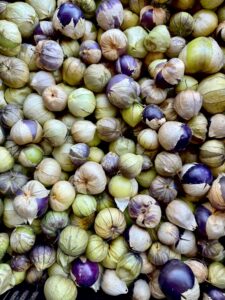
Tomatillo de Milpa
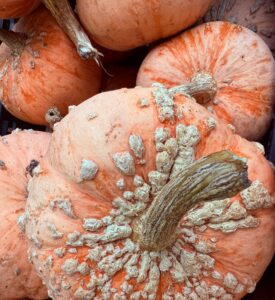
Galeaux d’Eysines, a sweet, heirloom, French cooking pumpkin that can serve as an ornament until it’s made
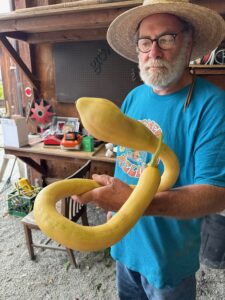
Here I’m posing with an heirloom Italian Butternut squash cousin called “Tromba d’Albenga”
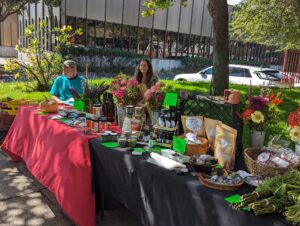
Here’s looking out across our pop-up in Dogpatch. A super pleasant scene. Thanks, SF.
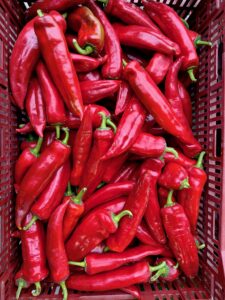
Red Anaheim peppers mix the sweet with the heat.
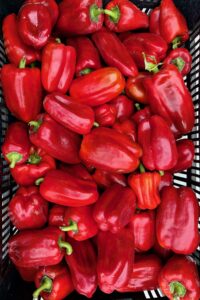
Red Bell peppers
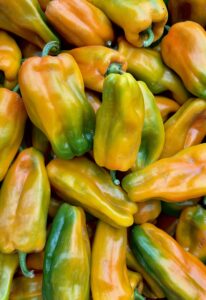
Sweet Golden Bull Horn peppers aka “Corno di Toro”
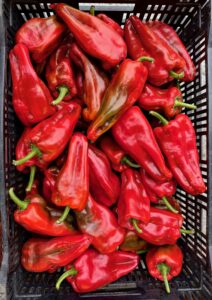
Red Bull Horn Peppers; all sweet, no heat
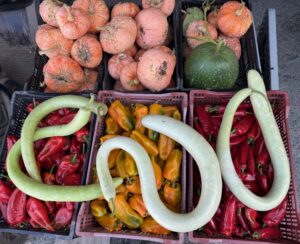
The cucuzzi gourds will naturally curl if they are not grown on a trellis to hang down from.
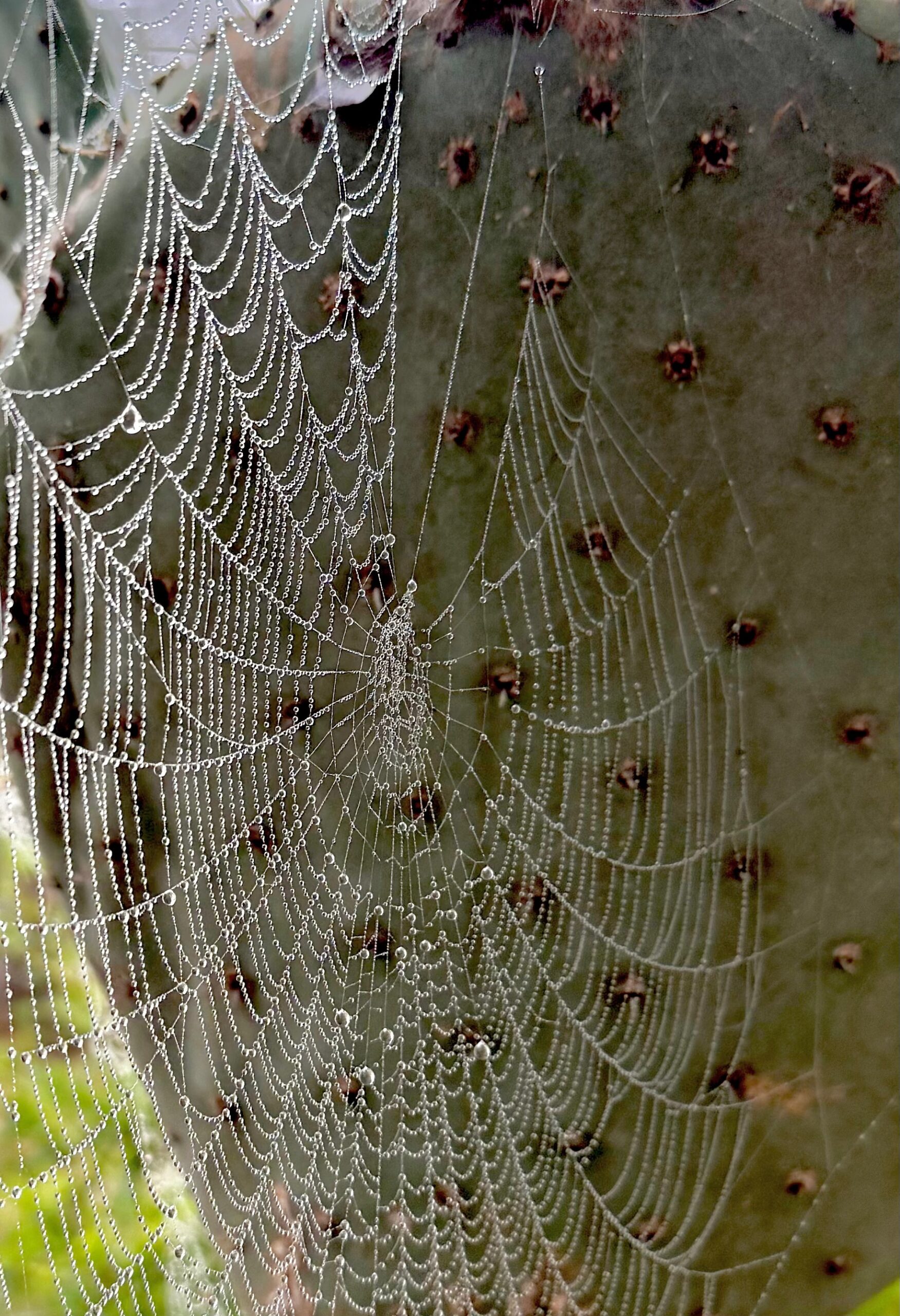
Who needs diamonds when you have fog an a spiderweb?

.
|

 Copyright © 2023 Mariquita Farm. All Right Reserved.