

Ladybug Postcard
At Home with Ambiguity
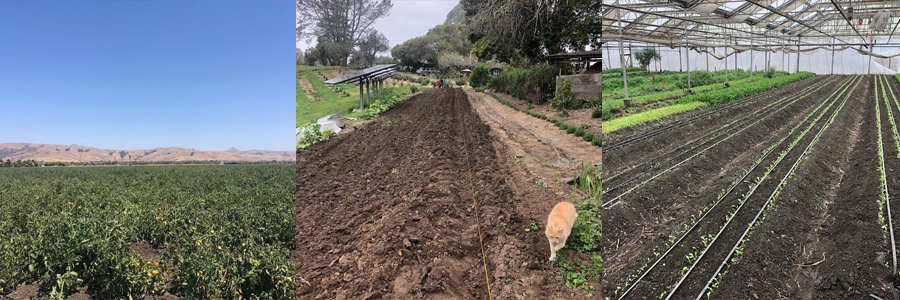
If you’re not “at home” with ambiguity, surprises, and triage as a lifestyle, then farming probably isn’t for you, but even by that measure 2020 has been extra special. Now, as the days get shorter, the nights get cooler, and winter lies just over the horizon, it’s natural to take a deep breath, look around, and… First, there’s the climate to consider.
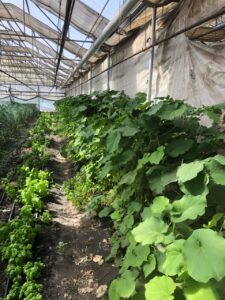
Dennis Tamura, my friend and neighbor who runs Blue Heron Farm, just down the road, asked me the other day how I was planning and planting for the winter. “We use to wrap most harvesting up by Thanksgiving,” he said, “because after that it was too wet, but now it seems like there’s been a shift and we can keep going all the way through December. But the rains seem to come later now and it’s harder to get an early start in the spring.” I agreed. Yes, it’s only anecdotal evidence, but our climate does seem to be changing in ways that already affect our behavior. I told Dennis I’m still planting some salad and cooking greens in my outdoor ground that I’m planning on picking into the new year, but because I can’t trust the weather to “stay put” I’m also planting in the greenhouse so that, one way or another, I’ve got crops to pick. For each of the last several years we’ve had enough late rain to delay our entry into the outside ground I’ve got here in Corralitos until May. And, just to be really sure we have a harvest we can count on, we’re also planting out in the Hollister-Gilroy area of San Benito County that we know as “The Bolsa” because it’s in a rain shadow of the Santa Cruz Mountains. Even when it’s raining on this side of the hill it’s dusty 30 miles to the east. Right now we’ve got chicories, lettuces, and brassicas, like cauliflower, planted over there.
 Then there’s the political climate to consider. If the vagaries of the weather weren’t enough, many farmers have to keep an eye on the political climate. Stone fruit growers, for instance, can be dramatically affected by policies out of Washington that would seek to sharply limit or decrease the supply of immigrant, migrant labor. Since native born people seem absolutely unwilling or unable to do this work, there have been in recent years, many examples of fruit crops falling from the trees or rotting on the ground. I’ve noticed that there’s more open ground around Watsonville than I’ve ever seen as berry farms have shut down or moved to Mexico in part because of persistent labor shortages. Grain farmers who count on foreign demand to keep prices up can also suffer when Federal embargoes affect the market. None of this ever affects me directly because we have a diverse planting schedule for fresh produce sold locally but I do need to make sure I have steady work for my crew all year long because the housing situation is so dire that if I lay people off seasonally they’ll have to move to someplace where they can afford the rent and then I’ll struggle to replace them. We work all year long because we have to- not because it’s easy to farm in the winter. We are planning on shutting down for a week or so round Christmas though, just to rest. And later, from the third week of January through the second week of February, we won’t be harvesting, but we will be doing production work in the greenhouses ahead of our early spring harvests.
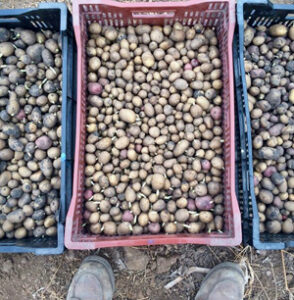 And then there’s the economic climate. This year, the Covid 19 plague, wiped out the restaurant market that we’d counted on for a substantial amount of business, and that forced us to make a series of rapid adjustments. Thanks to you and your support, we’ve been able to “weather the storm” so to speak. We’ve kept a crew going, kept planting crops, kept harvesting, and now we’re planning out year 2021 with you and your needs and expectations first and foremost in our mind. Some crops, like our artichoke crop, are already planted, and just waiting for the spring rains to come. For other crops, it’s time to buy seed ahead of the new season. I’ve already got potatoes in the cooler that are destined to be planted out in February- weather permitting. Seed got harder to get this year- and became more expensive- so I’ll be buying my seed earlier than I have in the past. And I’ve been saving seed from my own crops. Carmen will clean some bean seed this afternoon, beating on the pods with a stick and winnowing the crushed hulls away from the seeds, just like people have done for thousands of years. Some things never change.
 Lastly, I’d like to thank our pick up site hosts. Without the generosity of our site hosts we would not be able to do this business. Shelley who has been our mystery box coordinator for some time now does an amazing job pulling all the pieces together necessary in making this a viable business. She works with the hosts and the customers with untiring customer service. Thanks to all of you we can provide a program that works! On a helpful note, in keeping the pickup site orderly we ask that everyone folds and stacks their boxes prior to leaving the site.
All of us here at Mariquita thank you for your support.
Andy and the crew at Mariquita farm
© 2020 Essay by Andy Griffin. Photos by Andy Griffin.
Yerbas Buenas
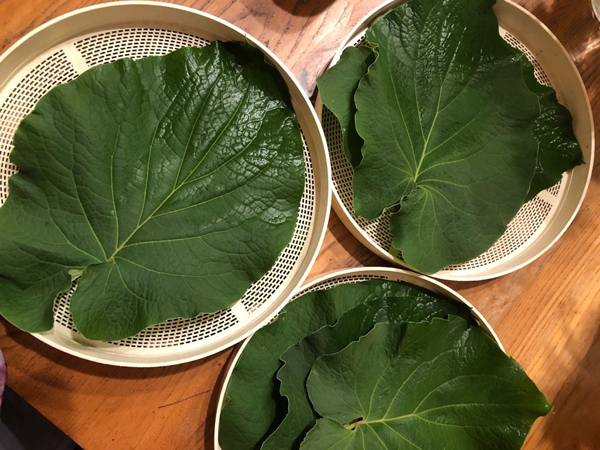
Starling is drying bales of Hoja Santa in the food dehydrator so our kitchen is enveloped in an aromatic, herbal haze, prompting me to think about breakfast, lunch, and history. Let’s look at the past before the repast.
History is written by the victors, not the victims, so when I was in kindergarten Columbus “discovered” America. Maybe it’s more accurate to say that history is “rewritten” by the victors. Our past is constantly undergoing reinterpretation as new information comes to light or as we mature enough as a community to look at the old facts in a new way. Also, the oppressed voices of previous generations don’t necessarily remain silenced forever. If a defeated community regains its sense of worth, then it’s natural that the people in it will begin to push back against a dominant culture’s version of history that chooses to ignore their past accomplishments, demean their historic role in creating our present or minimize their right to participate in planning our future. That’s where we’re at today in America, with a fraying establishment’s narrative undergoing some timely and therapeutic re-examination. If your sense of self-worth depends on a historical order that’s under re-evaluation then critical scrutiny by contemporary historians can feel like an attack. A foolish yet natural response of the frightened ignorati is to attack the messenger for bringing the news. So, for example, as the 1619 Project encourages us to reexamine our nation’s history of slavery and racism, it’s getting common to hear slurs being lobbed at the historians who would dare to take another look at our shared past – “communists, anarchists, socialists, liberals, terrorists, snowflakes, etc.” Universities get the brunt of the abuse because they are the vectors of learning and new ideas. But history isn’t just academic; it’s as down and flavorful as the crops in our fields or the food on our plates.
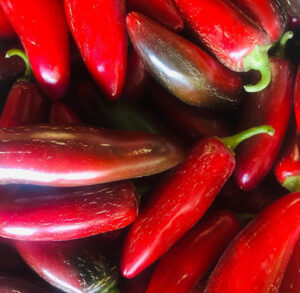 Of course, the myth of Columbus was always an odd half truth. It’s not only that the millions of people already living in the Americas in 1492 didn’t need Columbus to “discover” them in order to exist. Columbus crashed into America. He misunderstood the lands that he encountered upon crossing the Atlantic to BE India. But lots of money was at stake. The lucrative trade in Black pepper, Piper nigrum, that motivated investors to bankroll Columbus’s radical voyage across the Atlantic to India, was too important to ignore. So, to satisfy investors the native Americans became “Indians.” Lacking real black pepper to return home with, Columbus loaded up a cargo of the dried, spicy chilies that the Native Americans were cooking with and called them “peppers.” The American Capsicum species are not related to the Piper nigrum peppercorns of the “Spice Islands” that Columbus thought he’d found his way to, but they are spicy. It’s interesting that once the Spaniards discovered the Pacific and crossed it to Asia the residents of the real Spice Islands were more delighted with the American chili “peppers” than the Europeans who’d “discovered” them were. You don’t want to make blanket declarations about any continent’s culture, but it is true that the chili pepper slipped into Asian cuisines very readily. Today there are many varieties of chili that have been selected and improved by Asian farmers, but they all have their roots in the Pre-Columbian agriculture of the Americas.
 Corn, squash, beans, potatoes, tomatoes, tobacco, chili peppers, chocolate….; the Native American farmers cultivated so many plants that became major foods for the rest of the world that it’s interesting to look at the varieties that were not immediately adopted by the rest of the world. Ironically, one Native American garden plant that Columbus didn’t “discover” was actually a true pepper variety, related to the Piper nigrum that motivated the Spanish adventure in the Americas in the first place, Piper auritum. The leaves of this plant have a rich, anise-like scent. While the Piper auritum has many names across Latin America- “Anisillo,” “Tlanepa, “Acuyo”- one of the most common names is “Yerba Buena” or “Hoja Santa,” which means “Good Herb” or “Holy Herb.” One problem for food historians is that a wide range of desirable herbs have been called “Yerba Buena.” What’s now the City of San Francisco was once the village of “Yerba Buena,” for example, and the “good herb” in this case was a native California mint family member. If the historical revisionists reject the community’s present name “San Francisco” because it celebrates Catholicism I can see the town’s name reverting to “Good Herb,” but that’s another story.
 I started growing Hoja Santa because Matt Gandin, the Chef at Comal in Berkeley, asked me for some. I didn’t know anything about the plant, but Fidel, our farm’s foreman in the greenhouse, was very familiar with the crop so I felt comfortable giving it a try. Our friend and neighbor, Don Pablo, has a nursery, El Capulin, that grows a wide range of ornamental and edible plants that he sells in farmers markets so he set us up with some plants and we were off and running. The Hoja Santa plants grow big and tall. They require some protection from the cold of winter but they’re pretty hardy. Fidel tells me that “every family” in Oaxaca has an Hoja Santa plant growing in their yard, so it’s not worth a farmer’s time to produce the crop for sale, but the leaves are used in daily cooking. The big, heart-shaped, aromatic leaves are used to wrap fresh cheeses and they lend their scent to the food. Sometimes the fresh leaves are used as wrappers for other foods too, the way that corn husks are used to wrap tamales. And the leaves are dried and crumbled too, for use in egg and bean dishes, in soups and in stews. Because the Hoja Santa has a sweetness to it there are also a number of drinks or cocktails that can be made using it’s flavoring. In my own kitchen I’ve used Hoja Santa to flavor scrambled eggs and quesadillas. When it’s not so hot outside and my mood turns more to soup I’ll try it in broths. This Friday I’m thinking I’ll try some Holy Leaf cocktails!
The Hoja Santa plants stop growing and lose most of their leaves here during the cold weather or winter, so we’re drying what we can now while the plants are green and fluffy. We will be preserving other herbs too, as time allows. In the greenhouse we’re propagating more lemon verbena, oregano, marjoram, savory, thyme, rosemary, sage, nepitella, lavender and mints. We’ve been growing a lot of roses in the yard too- we’re up to over a hundred plants- with an eye to rose bouquets, rose petals, and rose hips. They’ve all got their uses in the kitchen and they’re all Yerbas Buenas.
© 2020 Essay by Andy Griffin. Photos by Andy Griffin and Starling Linden
Smoke in the air. Fire in the belly.
Covid creeps closer; a worker on our landlord’s farm fell ill and is in quarantine at present. I’m not too alarmed (yet) for our farm because we don’t share a workspace with that farm crew, we keep our distance, we have prophylactic measures in place, and the sick worker is being cared for. But I am angry. At a time when the country is threatened by this illness and so many people are out of work and struggling to pay their bills, it’s insane that the president ignores the advice of his own administration’s medical experts and holds mass indoor rallies to celebrate his vanity and trumpet his ignorance. What can you say about his so-called “conservative” supporters who seemingly seek to conserve nothing more than their own sense of privilege? Meanwhile, the essential workers, like the farm workers, must labor to survive in an increasingly dangerous environment. I’m mindful that no matter how careful we are at work, at the end of the day the workers must return home to crowded apartments where social distancing is impossible. For many farm workers the workplace may be their safest place. It’s hard to keep positive sometimes and I’m counting the days until I can vote for change. Meanwhile, we’re already planting the crops that we’ll be harvesting in what I hope will be a new era where medical science gets renewed respect.
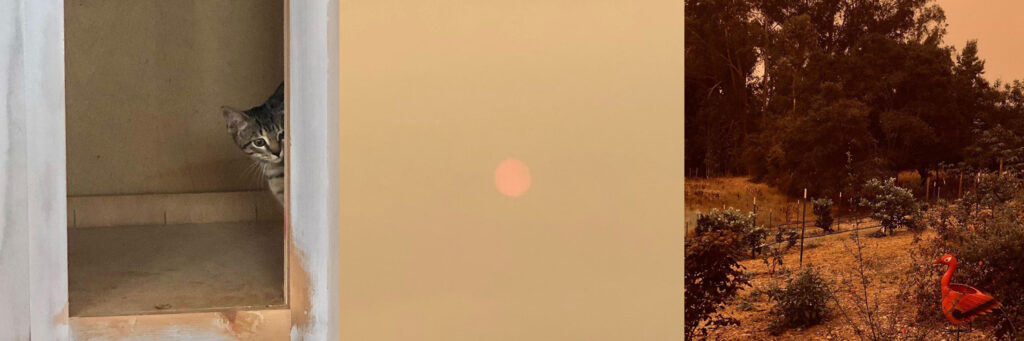
The smoke has been hard to live with too. It’s been difficult to breathe at times, and every breath is a reminder of what we’re losing to the fires. As a farmer, it’s easy to observe how the smoke is slowing the growth of some crops. A friend with a fruit farm remarked this morning how her fig crop is ripening more slowly under these unseasonably dark skies. In our own greenhouse we can see how the arugula is responding to the lower light by growing slower and more etiolated. Climate change deniers, like Trump and the chumps who crowd his rallies, reject the idea that human activity is capable of changing the climate. But the smoke tells the truth. Poor management is the issue, says the man who bankrupted a casino, as well a number of other businesses, and he blames Democrat States for not “sweeping the leaves.” Of course, many of the fires are on Federal land- supposedly his jurisdiction and responsibility- so he’s an idiot who only speaks to “own the libs” and blame the victims. But even a broken clock is right twice a day; it’s true that poor forest management is partly to blame for these catastrophic fires, which only proves the point that human behavior DOES have a lot of influence on the climate. So, while we wait for an opportunity to depose the Twitler, we strap on our masks against the Covid virus and the smoke and we do the essential work of harvesting food. Right now we’re in the middle of tomato season, while much of the crop has been lost to scalding heat and disrupted markets, there’s still plenty to pick over the next month.
 So things are sad, but one remedy for depression is to stay busy. We don’t have the luxury of hiding from the smoke but at least it smells great inside our house. The crew has been grooming the beds of perennial herbs, and Starling has been running the dehydrators 24/7, drying oregano, thyme, and marjoram. These aromatic, mint family herbs all go with tomatoes like cookies go with milk, so it makes sense to pick them now that it’s time to make tomato sauce for the winter. With so much uncertainty over the viability of supply chains we’ve noticed more interest on the part of the public to lay aside a stash of tomato sauce against the coming winter. Or maybe it’s just that being out of work means more people have time to make sauce. Anyway, our house smells like herbs and it’s great. And it’s good for the oregano, thyme, and marjoram plants to get a trim too; that way the plants don’t go to flower, but are stimulated to produce fresh growth. Oregano, thyme, and marjoram are perennial in this climate and will grow all year if encouraged. I want to have healthy plants come winter because these herbs also marry well with the soups, stews, and roasted winter veggies. Speaking of winter, we picked the first “winter squash” this week and you have them in the box. These are “small” Napolitano squash- and they are small, considering that the “big” ones reach 30 and 40 pound apiece. I’m still thinking about how we’ll move the whoppers. Cook Napolitano squash like their Butternut cousins. They’ll keep for up to year too, if you can’t use them now. That’s a fact, not Trumpstyle b.s. – keep the squash out of direct sunlight in a cool, dry space and they’ll only get sweeter with time.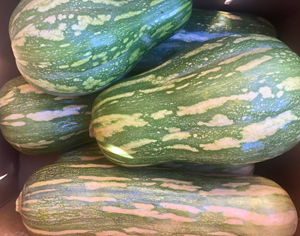
Starling is also drying herbs for teas and herbal infusions. Yes, it’s an Allman Brothers’ tune, but “Sweet Melissa” is one name for Lemon Balm or Melissa officinalis, which makes a delightful tisane. It’s a mint family member too, and “Lemon mint” is another name for it. I propagated the plants we’re picking now from wild plants I found in the redwood forests 20 years ago. With so many local redwood forests burned I comfort myself to know that the redwoods will largely survive the fires and grow back. Sweet Melissa will survive too- she’s tougher than she looks. We might talk about about “destroying the planet,” but the planet is going to be fine. The cockroaches, the rats, the ground squirrels, and the flies are going to be fine- it’s our grandchildren who are going to suffer if we don’t take responsibility for our actions on the planet. A true conservative with family values would value the future; these Trump republicans are like locusts without the grasshopper’s ability to fly without burning oil.
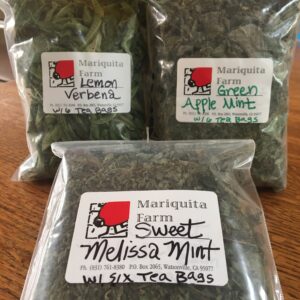 Then there’s apple mint, another survivor. It makes a pleasing herbal tea and nothing can kill this plant! It does have a sweet apple scent, and it’s calming, which is always a good trait. I should drink some now!
And finally there’s Lemon verbena, which is not a mint family member. It makes a delightful tea with a flavor that is just the right thing to help ease us into fall. Various claims are made about the health benefits of Lemon Verbena. All I can say is that it has to be better for you than injecting bleach.
We will be rolling out lots more dried herbs as the weeks unfold; summer savory, sage, sweet laurel, rosemary, lavender and a special herb that I will talk about later, Hoja Santa. November can’t come quick enough and when it does we can all raise our cups with hope for what the future can bring. Let’s look forward to fall cooking and a celebration that will have us all toasting to the opportunity of breathing new life into our land.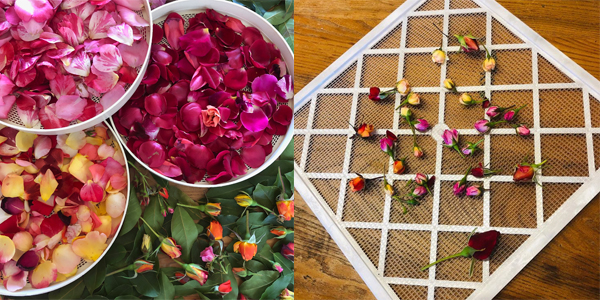
© 2020 Essay by Andy Griffin. Photos by Andy Griffin and Starling Linden

 Copyright © 2023 Mariquita Farm. All Right Reserved.