

Ladybug Letters
Our Lady’s Birds
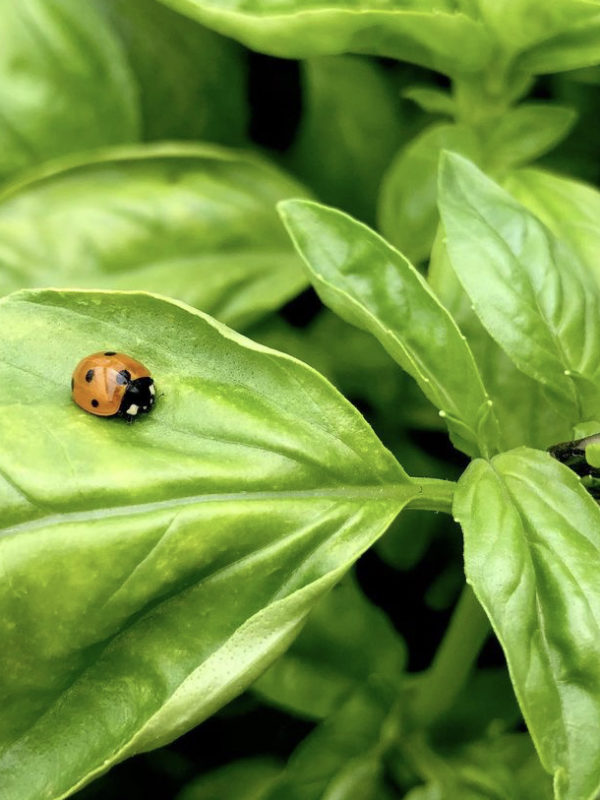
In England, early images of The Virgin Mary often portrayed her wearing a scarlet robe so it made sense from a medieval perspective to call the little red-shelled beetles that made the gardens their homes “Our Lady’s Birds.” The English Seven Spot Ladybird beetle’s “look,” rocking black spots on a shiny red shell is so striking and memorable that it’s image “branded” the entire family forever. When you factor in that the seven black spots on the Ladybird beetle’s shell recall the Virgin Mother’s “Seven Sorrows,” then the name is even richer in meaning. When Our Lady’s Birds crossed the Atlantic to the Americas they got their names changed at Ellis Island, just like so many other immigrants. The name, “Ladybug,” is an Americanism.
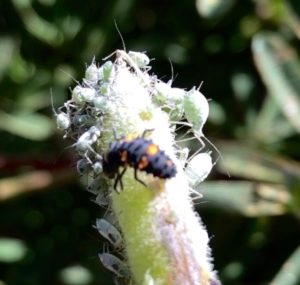 Be they birds, bugs, or beetles, these cute little creatures are fierce predators in the garden and gobble many times their weight in pesty aphids during their lives. Interestingly enough, the Ladybugs that eat the most pests don’t look like Ladybugs at all. Like all beetles, the Ladybugs have a larval form of life before they pupate and become the cute, red shelled, black spotted creatures we love to find in our gardens. The larval, or nymph stage, ladybugs eat a lot more pests than the mature, hard-shelled forms. For the gardener, the goal has to be to create an environment so attractive to the Ladybugs that the mature beetles fly in, have a meal, then decide to lay eggs. If you buy a jar of ladybugs and turn them loose in your garden they may all fly away. So save your money and create the garden they fly to!
Planting a mix of perennial and annual plant species will give the Ladybugs a place to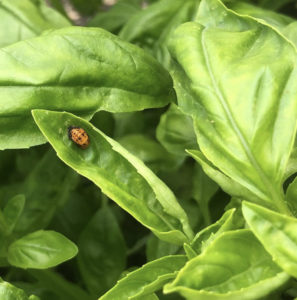 take shelter and lay their eggs even when one part of the garden is being turned under. If you don’t spray your garden with pesticides then some pests will be able to survive, which will give the hatching ladybug larvae something to eat. We aim to create a delicate balance wherein there are enough living pests to support a permanent predator population of Ladybugs, but not so many pests as to damage the crops. At our home ranch we’ve planted a drought tolerant hedgerow at the edge of our citrus orchard that is only a year old, but is already serving as habitat for aphids- and the Ladybugs that feed on them.
—© 2021 Essay by Andy Griffin and photos by Starling Linden and Andy Griffin
~Special Note~
As the weather is getting warmer, the sun is rising earlier and the harvesting begins with the sunrise, we will be closing our East Bay/Peninsula shop by 6 PM on the Wednesday evenings before the Friday delivery. We close our San Francisco & Mystery Thursday shops on Wednesday mornings by 8 AM and our Santa Cruz/Los Gatos shop by 8 AM, on Monday mornings. Please get your orders in early so you don’t miss out on the harvest! Thank you all again for being such a part of our bountiful farm!
If you haven’t ordered a Mystery Box recently, now is a great time to get in on spring deliciousness! LadybugBuyingClub
The Many Scents of Lavender
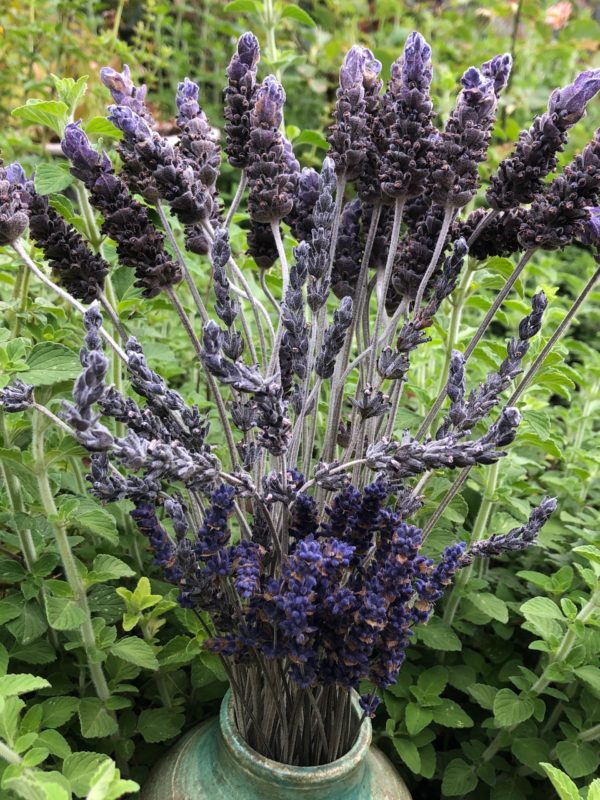
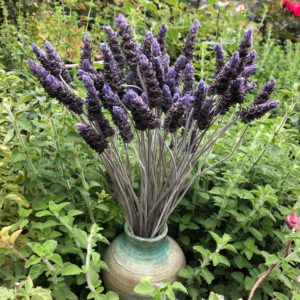 Spanish lavender, or Lavandula stoechas, is a Mediterranean lavender that is very robust and hardy and can grow from a tiny seedling into a waist high shrub in a year. This is the lavender species that was most likely grown or gathered from the wild during the ancient times. Lavandula stoechas has flower buds that are big, fat, and almost tarry with very aromatic essential oils. Most people believe that this highly scented herb got its name from the Latin verb, “lavare,” meaning “to wash,” because lavender plants were used to make soap or used in infusions to fumigate clothes. The word Latin “Lavare” is cognate with the modern English word “laundry” and the Middle English word “Lavendrye,” meaning “place of washing.” Of course the Etymologists are just as prone to controversy as the Botanists, so there are rogue wordsmiths who believe that Lavender takes its name from the Latin “livere,” meaning “blueish.” Whatever…..
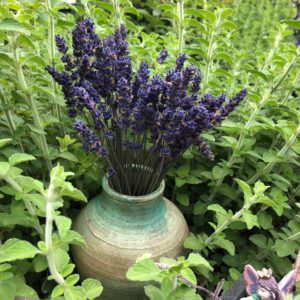 Lavandula dentata. I’m using it to refer to a Lavandula dentata variety that has a thinner flower bud than the “Spanish” lavender as well as a somewhat different scent. The French worked with Lavender species to create varieties that were especially useful in the perfume trade. Lavandula dentata has a more refined look to the stem and a somewhat less aggressive habit of growth than the “Spanish lavender.” It’s worth noting that the French refer to Lavandula dentata as “English lavender.” We’re not ICE agents here, so we’re not checking passports. We value the Lavandula dentata varieties for their scent and for the nice, long, spicy wands we can make from their dried stems.
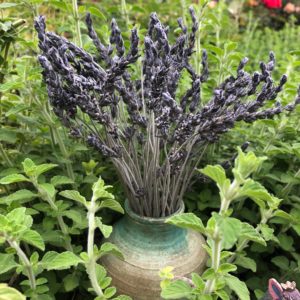 “English lavender,” or Lavandula angustifolia, is yet another complex tribe of lavenders. Like it’s Spanish and French cousins, English lavender is a highly scented member of the Lamiaceae, or mint family, and compared to them it has flowers that are on the purple end of the spectrum. The English lavenders we’re growing are typically shorter in stature with a brighter blue to the flower petals than the French types. Our English lavenders are the most disciplined and compact in their growth habit, making them the most desirable plant to use as a low hedge in a labyrinth, and they make nice, smaller bouquets. Over the last 100 years there’s been more culinary interest in lavender than in the past. Yes, long ago Lavandula stoechas was used to make spiced wine, but in these days the English types have been more frequently used to flavor pastas, desserts, or teas. Please note that drying increases the “potency” of lavender, so if you choose to cook with lavender you can use rather less dried lavender than fresh flowers to achieve the same effect.
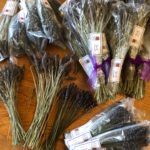 So far, so good. Hopefully the Covid crisis will end soon. By the end of the year I’m hoping to have the labyrinth finished. In the future we’ll be able to invite people to walk the lavender scented paths with us. And right now we’re enjoying a nice harvest on all the lavenders we planted before Covid when we were testing out our location and our soil to see if the plants would do well here. They do! And this week we’ve got a “Lavender Flight” special to offer, with a bunch each of Spanish, French, and English lavender so that you can enjoy their different their scents.
—© 2021 Essay by Andy Griffin and photos by Starling Linden
~Special Note~
As the weather is getting warmer, the sun is rising earlier and the harvesting begins with the sunrise, we will be closing our East Bay/Peninsula shop by 6 PM on the Wednesday evenings before the Friday delivery. We close our San Francisco & Mystery Thursday shops on Wednesday mornings by 8 AM and our Santa Cruz/Los Gatos shop by 8 AM, on Monday mornings. Please get your orders in early so you don’t miss out on the harvest! Thank you all again for being such a part of our bountiful farm!
If you haven’t ordered a Mystery Box recently, now is a great time to get in on spring deliciousness! LadybugBuyingClub
The Milpa and the Holy Trinity
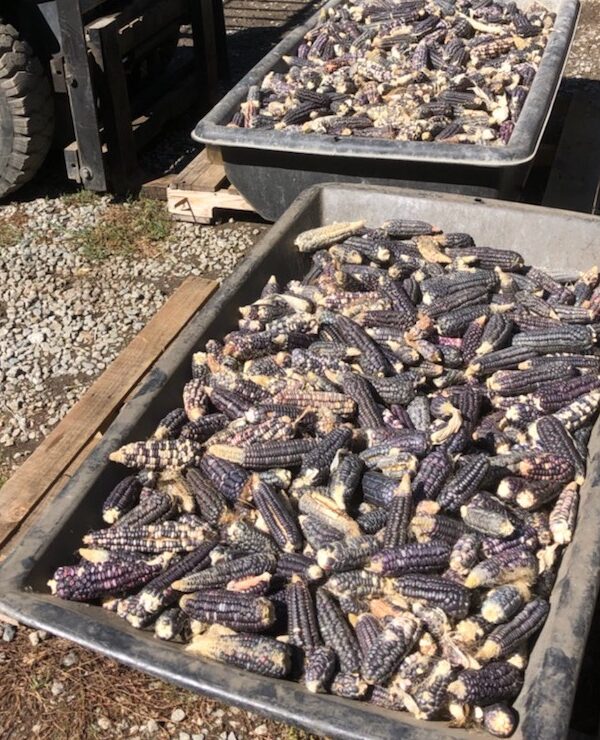
We planted the first stage of our little “milpa” this weekend. A milpa is a “corn patch.” The City of Milpitas is named after the little corn patches that characterised the area during California’s Spanish colonial period. But a classic traditional milpa is always more than corn. The Mesoamerican farmers who created the milpa typically grew a diversity of crops in their corn fields. The corn stalks grew high and vining beans snaked up the stalks, using them for support. Broad leaved squash plants would grow between the scattered hummocks of corn, and the dense canopy they formed would choke out the weeds. Crops that we moderns might think of as noxious weeds to be exterminated, like pigweed or lambsquarters, were “quelites” to the farmers of the milpas and they’d gather them to add leafy greens to their diet. A fully realized milpa consisted of Corn, squash, and beans -the Holy Trinity- surrounded by a cohort of useful and nutritious herbs.
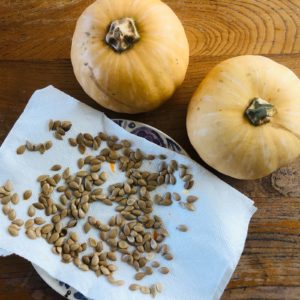 I’m playing around with the milpa idea for fun, and to see how well it works out in practice. I see my milpa as a typical type garden which might be found anywhere along the French-Mexican border. For my hard squash I’ve chosen to plant “Doran,” an heirloom French squash for the Cucurbita moschata- like a butternut, but round, like a pumpkin. I think the Doran hard squash will be an excellent size for our farm’s supporters, since they’re small enough for us to fit in the box and for our supporters to consume in one meal. We received seed for this crop from our friend and neighbor, Zea, at Fruitilicious Farm, who has been saving this old fashion variety. Any purslane weeds that come up in our milpa we’ll let go to seed so that we can have “verdolaga.” Purslane, AKA Verdolaga, which is esteemed as a cooking green in both the French and Mexican traditions.
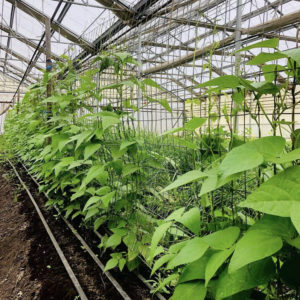 the trade as Scarlet Runner beans or “Akahana Mame.” I’ll wait until the corn is up before I plant the beans so that they won’t choke the poor corn plants out. And to help the beans find direction up I’m also putting some sunflowers in my milpa. Sunflowers are another gift of the Americas to the rest of the world, and the ancient farmers who developed them treated them as a grain crop for their rich seed. I don’t think I can beat our local birds to a crop of sunflower seeds, so I’m growing some ornamental varieties for late summer bouquets.
We have a lot to look forward to this fall and I can’t wait to see what comes out of the milpa.
—© 2021 Essay and Photos by Andy Griffin.
~Special Note~
As the weather is getting warmer, the sun is rising earlier and the harvesting begins with the sunrise, we will be closing our East Bay/Peninsula shop by 6 PM on the Wednesday evenings before the Friday delivery. We close our San Francisco & Mystery Thursday shops on Wednesday mornings by 8 AM and our Santa Cruz/Los Gatos shop by 8 AM, on Monday mornings. Please get your orders in early so you don’t miss out on the harvest! Thank you all again for being such a part of our bountiful farm!
If you haven’t ordered a Mystery Box recently, now is a great time to get in on spring deliciousness! LadybugBuyingClub
Brand New Potatoes!
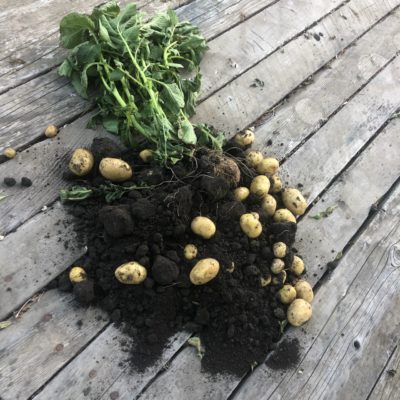
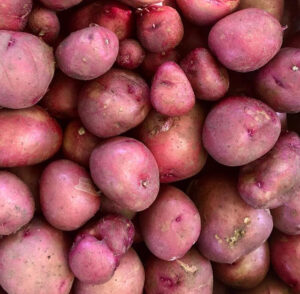 high, and when they start to bloom we know that they are setting a new crop of potato tubers underground. Red skinned potatoes make rose colored flowers. Yellow and white potatoes have white blossoms, and purple potatoes have purple flowers. If these flowers get pollinated they will eventually form small, hard green fruits full of seed that resemble their tomato cousins, but we don’t worry about them. Instead, we wait for the potato plants to turn yellow, then wilt, and “die back.”
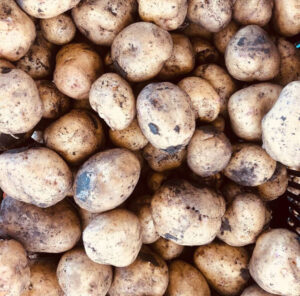 them to the pigs, but I save them. I like to make an early, thick planting of these cull potatoes that are too ugly to sell. When I see this crop flower I know there is a swarm of tiny potatoes growing underground. Once the young potatoes have swollen to about the size of golf balls we’ll dig them up as “new potatoes.” The gophers, beetles, and wild pigs that would gobble up our potato crop are not stupid; they know that there is almost nothing on earth as succulent and tasty as a fresh, young potato.
—© 2021 Essay and Photos by Andy Griffin.
~Special Note~
As the weather is getting warmer, the sun is rising earlier and the harvesting begins with the sunrise, we will be closing our East Bay/Peninsula shop by 6 PM on the Wednesday evenings before the Friday delivery. We close our San Francisco & Mystery Thursday shops on Wednesday mornings by 8 AM and our Santa Cruz/Los Gatos shop by 8 AM, on Monday mornings. Please get your orders in early so you don’t miss out on the harvest! Thank you all again for being such a part of our bountiful farm!
If you haven’t ordered a Mystery Box recently, now is a great time to get in on spring deliciousness! LadybugBuyingClub
What Kind of Pea?
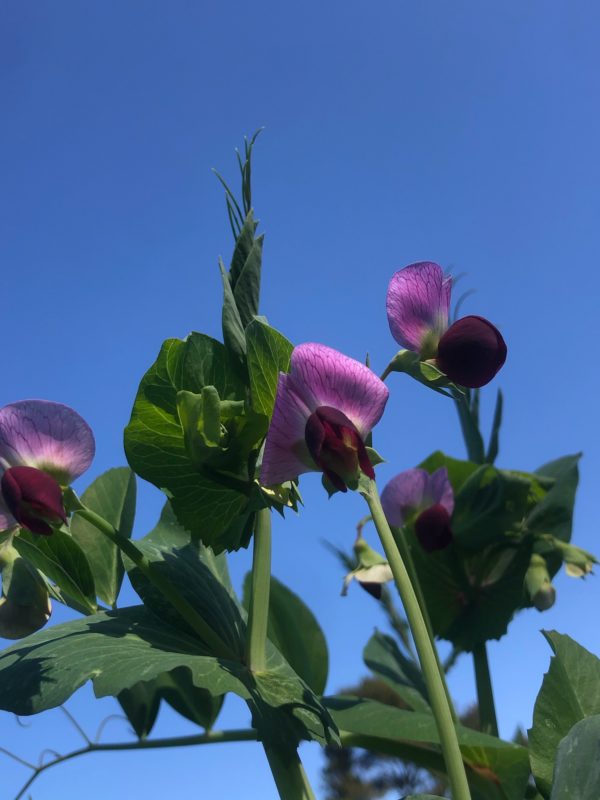
The girl was SO insanely sensitive, and yet her morbid fragility was somehow proof positive of her nobility? I was confused. Do you remember the Princess and the Pea? As a youth, I puzzled over her story. The poor thing couldn’t sleep. She complained that she’d tossed and turned all night because of a stone in her bed, and after the palace staff pulled the bedding from the frame, seven feather comforters in all, they found that it was a single, tiny dried pea seed at the bottom that had provoked all the distress. Why were we supposed to validate this girl’s hyper-sensitivity by crowning her? Compare the Princess of the pea to Tanya Tucker, the reigning “princess” of Country Music when I was a young. “Would you lay with me in a field of stone?” Tanya sang. She was 14 at the time, a year older than I was. Now that I’m an old fart with a snail mail box full of cremation insurance offers and AARP fliers I’m not so worried about figuring women out. I find myself wondering more about the pea that caused the Princess so much discomfort. “What kind of pea was it ?” I ask myself. The answer is not obvious.
Pea Soup Andersen’s, a popular restaurant chain for travelers with locations along California’s Highway 101 as well as on I-5, bases its menu around “split-pea” soup. The pea that Andersen’s uses would be a modern variety of Pisum sativum that has been selected by plant scientists for its utility in producing dried peas. A “Split pea” is not a
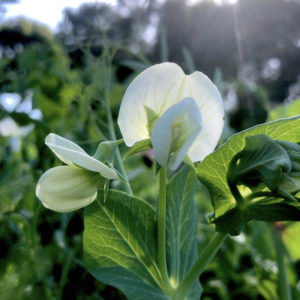
Snow pea flowers
specific variety of pea.The pea plant is a “dicotyledon,” meaning that the seed is an embryonic plant that will germinate to present a pair (“di”) of infant leaves (cotyledons). A dried pea seed can be “split” into two halves, each part being a half of the starchy dicot pair that is enveloped by the hull of the seed. The Snow pea, the Sugar Snap pea, and the English pea are also varieties of Pisum sativum developed for use as fresh vegetables, but you could let their seeds mature on the vine until dry, then “split” them and make them into soup too, if you wanted or needed to.
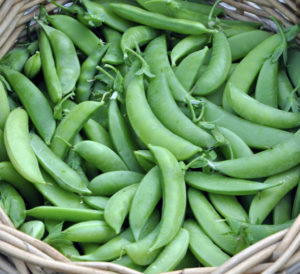 So the controversy can’t be resolved at the moment. For the last couple of weeks we’ve been enjoying snap peas. This week we begin the English Pea harvest. We even have planted a crop of Chickpeas, and we’ll see how they do. Peas of any kind are an important crop for the farm because they are legumes. Legume species have the important ability to capture unusable atmospheric nitrogen and convert it into a form that plants can use as fertilizer. Legumes have a symbiotic relationship with a bacteria that infect the roots of the host plants and pay for their stay taking in and digesting nitrogen gas, then excreting it in a form that is available to the plant. That’s pretty “magical,” if you ask me. We grow peas to feed you, but we also plant peas in our cover crops to feed the soil so that we can keep farming the land happily ever after.
—© 2021 Essay and Photos by Andy Griffin.
~Special Note~
As the weather is getting warmer, the sun is rising earlier and the harvesting begins with the sunrise, we will be closing our East Bay/Peninsula shop by 6 PM on the Wednesday evenings before the Friday delivery. We close our San Francisco & Mystery Thursday shops on Wednesday mornings by 8 AM and our Santa Cruz/Los Gatos shop by 8 AM, on Monday mornings. Please get your orders in early so you don’t miss out on the harvest! Thank you all again for being such a part of our bountiful farm!
If you haven’t ordered a Mystery Box recently, now is a great time to get in on spring deliciousness! LadybugBuyingClub
A Different Type of Sting!
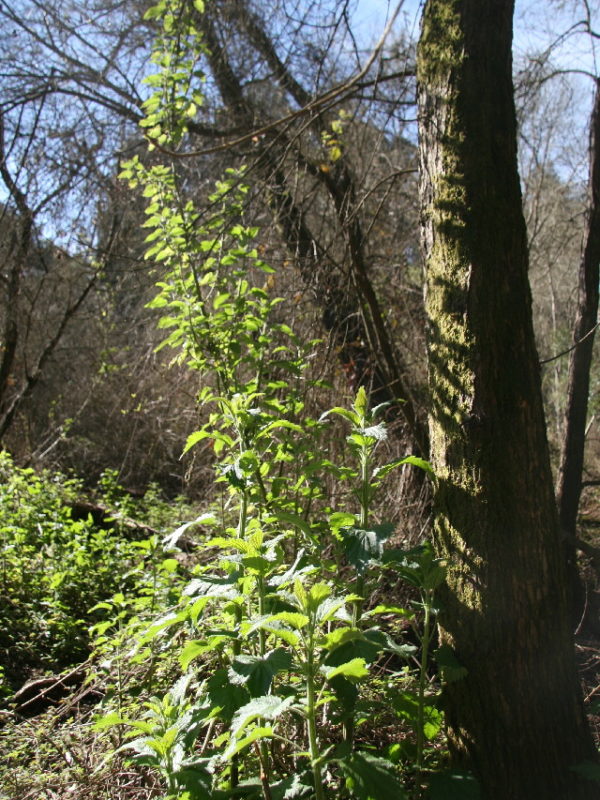
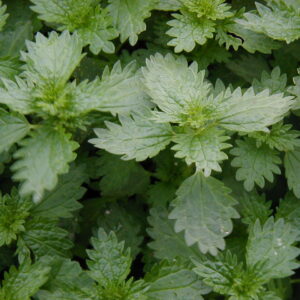 Garden nettles “belong” in the garden; they’re only weeds when or where I don’t want them growing. Sometimes when I have a nice patch of tender, garden nettles I’ll harvest and sell them to the folks that know these “weeds” were brought to California by Italian immigrants who grew them as cooking greens. Garden nettles are excellent used, like spinach, to make savory green sauces or winter-time ravioli fillings. Steep a pinch of garden nettles in hot water and you’ll have a soothing glass of herbal tea in minutes.
One day at the Farmers Market a frequent market shopper breezed past the sign I’d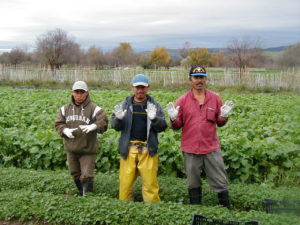 posted at the back of my stall that read “BEWARE- STINGING NETTLES. USE TONGS TO HANDLE!” She thrust her hands into the fresh nettles and then let out a little squeak of pain. I stepped over to point to the sign and hand her the tongs. “They’re not called ‘stinging nettles’ for nothing,” I said.
—© 2021 Essay by Andy Griffin.
~Special Note~
As the weather is getting warmer, the sun is rising earlier and the harvesting begins with the sunrise, we will be closing our East Bay/Peninsula shop by 6 PM on the Wednesday evenings before the Friday delivery. We close our San Francisco & Mystery Thursday shops on Wednesday mornings by 8 AM and our Santa Cruz/Los Gatos shop by 8 AM, on Monday mornings. Please get your orders in early so you don’t miss out on the harvest! Thank you all again for being such a part of our bountiful farm!
If you haven’t ordered a Mystery Box recently, now is a great time to get in on spring deliciousness! LadybugBuyingClub
From Oaxaca to Watsonville
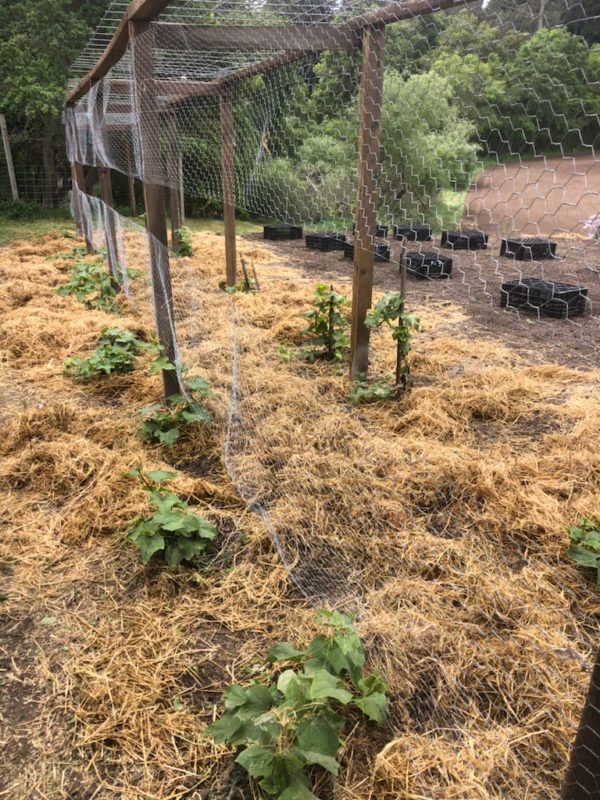
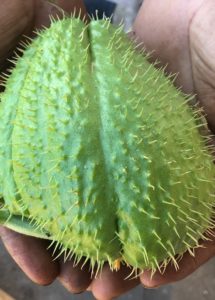
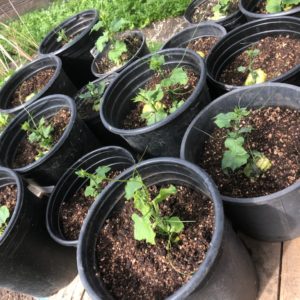 a number of different chayote plants of different varieties; smooth skinned, spiny, white-fruited, yellow fruited, green fruited. He told me how to protect the tubers from the gophers by putting them in wire baskets so that the plants could sprout back from underground every year as soon as the soil warmed up. And Fidel encouraged me to top off the frame with a rigid and strong mesh so that the squash can hang down to be picked easily by reaching up into the foliage with a pair of clippers. So far, so good. As the weather has warmed the young chayote plants are picking up speed, and this weekend, as cold as it was, the first vines still managed to grab onto the wire mesh and start their ascent. In the fields our summer squash are just flowering, but our chayotes won’t be ready until early fall. That should work out perfectly. I planted 20 plus chayote seedlings, and this planting will likely provide us with many, many pounds of harvest. At the very least we’ll be able to select out the varieties that perform the best here in Watsonville.
—© 2021 Essay and Photos by Andy Griffin.
Top photo is the Growing Chayote Vines.
If you haven’t ordered a mystery box recently, now is a great time to get in on spring deliciousness! LadybugBuyingClub
A Tale of Avocados
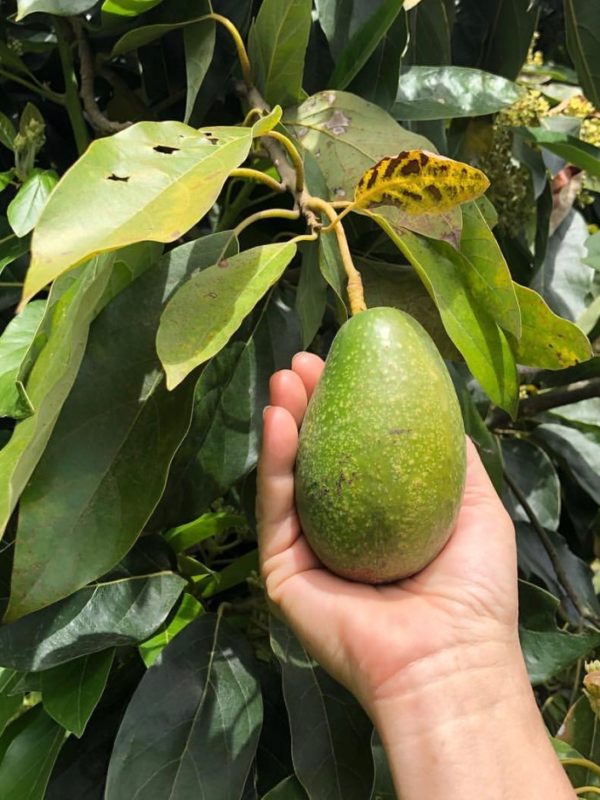
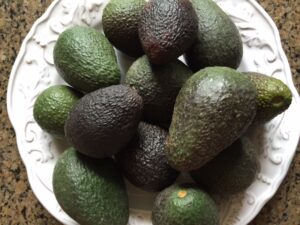 The Hass avocado is so ubiquitous in the contemporary American marketplace that for many consumers it is almost the only avocado that they know, the ne plus ultra of avocados, but the variety was only discovered in the late 1920s by a Mr. Rudolph Hass, postman and rare fruit enthusiast, who lived in Southern California near Whittier. (His children actually deserve the credit for discovering the variety because it was the kids who noticed how rich and unctuous the fruit was compared to other avocados and they drew his attention to the first tree from which all other trees were cloned.) But the avocado is a tree native to the Americas, probably originating in what is now Southern Mexico and Guatemala. Our English word, “avocado” is derived from the Nahual word “ahuacatl,” meaning “testicle.” But that’s not the only fun fact about the avocado plant.
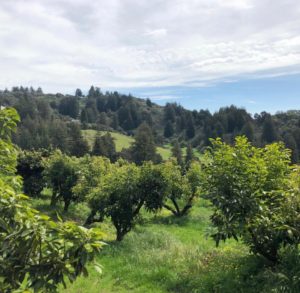 proportions by eating plants. One theory has it that avocados developed their oil-rich, flavorful fruit in order to appeal to the appetites of giant sloths, who would eat the fruits and then “disperse” the avocados’ big, round seeds around the jungle when they defecated. An avocado’s seed, or pit, is so big that you’d have to be a megafauna to “pass” one. Today, we not-so-mega mammals cultivate and disperse the avocado agriculturally and our attentions have changed the plant.
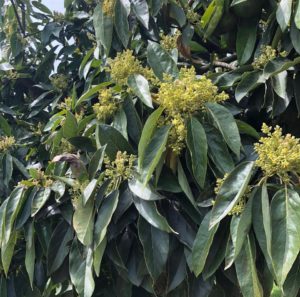 Avocados are often self-sterile, which means they will not self-pollinate. A Hass avocado tree will set some fruit after it gets older but it can’t be a really productive commercial crop unless it is cross pollinated with another variety of avocado. As avocados became popular in the United States beyond Southern California the Hass won the popularity contest in the marketplace. But you can’t have a viable Hass industry if you don’t also cultivate the pollinizer trees. Here in Central California I’ve seen growers use Zutano and Fuerte avocados as pollinators, but most farmers around here look to Bacons to get the job done. I like Bacons; I made a guacamole the other day using Rangpur Limes and Bacon avocados that came out very nicely. (I’ve planted a bunch of Rangpur limes, but at present only one tree is bearing. The Rangpur lime is actually a very tart type of mandarin orange, with a loose, thin skin and a bright scent. We should have a small harvest to pick and sell next year.)
—© 2021 Essay and Photos by Andy Griffin.
Top photo is a Bacon Avocado on a Marsalisi Brothers Farm tree.
If you haven’t ordered a mystery box recently, now is a great time to get in on spring deliciousness! LadybugBuyingClub
Feed the Soil
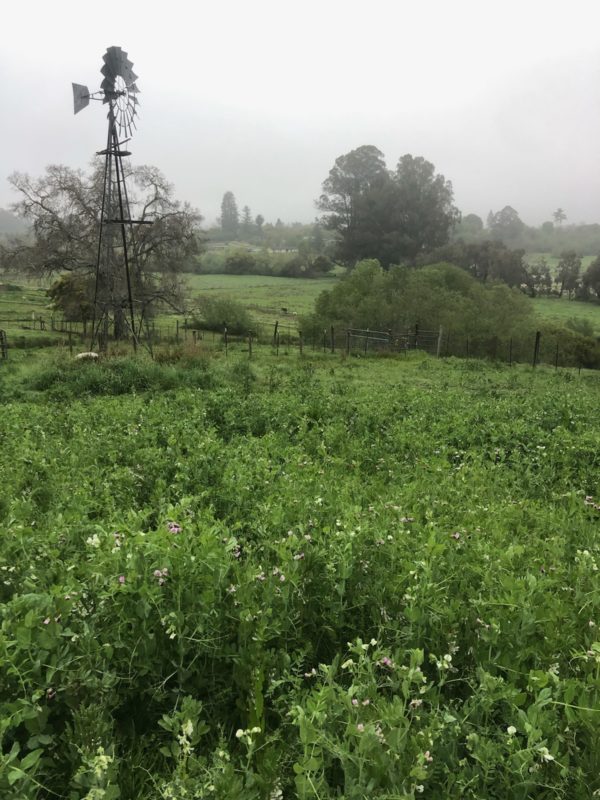
The organic mantra is “feed the soil.” Feed the soil, and the soil will feed you back. The plants that we harvest are the alchemists that can transmute the base elements of the earth into our food by spinning minerals together with light and water to make leaves, fruits, and seeds. When the soil is rich our crops can thrive. Sometimes we think of the earth poetically as a giving mother who feeds us, but it’s also clarifying to think of the soil as a bank account; every harvest is a “withdrawal” of nutrients and if we don’t make deposits then, sooner or later, we run out of funds. So we try to care for the soil by putting at least as much back into the soil as we take out. But really, to only replace what we have withdrawn is a bare minimum concept of soil care; in a better world we improve the soils we depend on, and cover crops are one very basic way to do this.
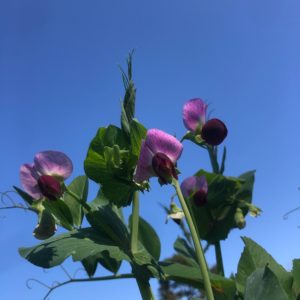 “soil builder” blend of cover crop seed. The idea is to “make a deposit of seeds” which then germinate and “accrue interest,” growing into a valuable crop of carbon and nutrients that can be “reinvested” by getting plowed under. There are grasses in the mix, like barley, oats, and rye. The grains germinate fast and first. And there are legumes in the mix; fava beans, vetch, and peas. The legumes sprout later than the grasses, and as the grasses grow taller the vining vetches and peas can lean on them in support. While the fava beans don’t need the grasses for support, they do benefit from the way the grasses act to break the winds that might beat them down.
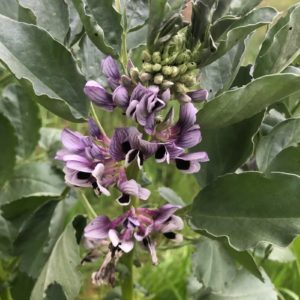 and favas were killed by frost and the cover crop was almost pure rye, because rye is tough in the face of cold weather. This year, Starr and I tossed out the cover crop seed by hand, counting on the dark clouds overhead to rain our seed into the newly turned soil. But after we planted our cover crop the clouds left without raining and a flock of birds came out of the sky and pecked up most of the grass seeds we’d just sown. The birds moved on when they’d mined out most of the oats and rye but they didn’t care for the peas, vetches or fava beans, so our cover crop is mostly made up of legumes. We didn’t have a “wet” winter, but we got rain enough to support a flourishing cover crop. There’s a sweet scent in the air from all the blossoms. I’ll almost be sad to turn this crop under.
© 2021 Essay and Photos by Andy Griffin.
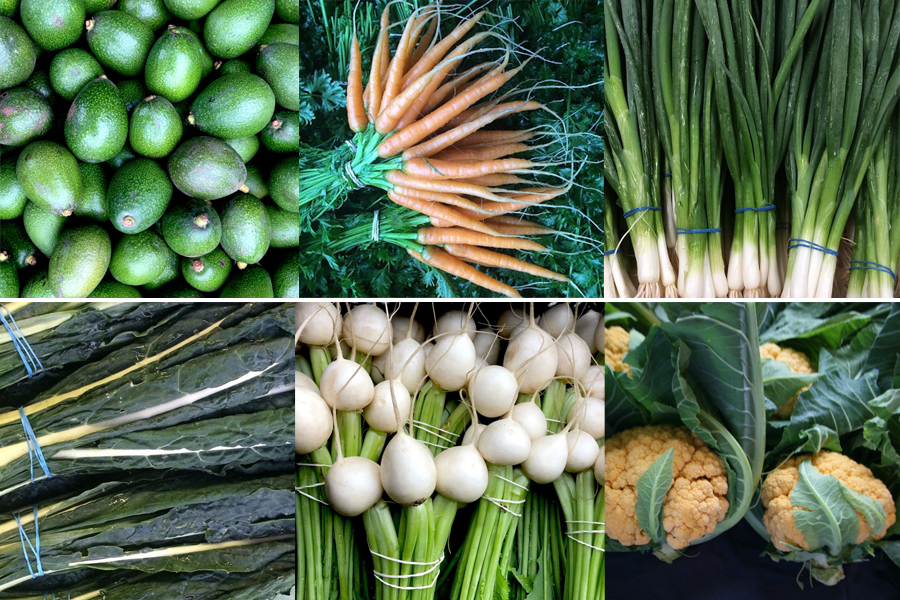
Top photo is the cover crop on the farm. And below, are a few things we’re planning for this week’s mystery box! If you haven’t ordered a mystery box recently, now is a great time to get in on spring deliciousness! LadybugBuyingClub
Living on the Central Coast
His supporters say it was a “heart condition” but opposition politicians claimed that the late John Magafuli, then President of Tanzania, was being treated in Kenya for Covid 19 when he died last month. Mr. Magafuli’s death provoked more conversation on our farm than you might have expected, given that Tanzania is a long way away and there are plenty of people closer to home- and closer to us wherever they are- who have been affected by this disease. But Starr’s daughter, Yarrow, had been stationed in Tanzania as a Peace Corps volunteer until just before the pandemic started. Yarrow’s projects in Tanzania included helping HIV/AIDs survivors set up poultry projects for egg production so that they could help support themselves and their families. But the late Tanzanian president had a misunderstanding with a foreign NGO and chose to strike a politically expedient “Tanzanian First” stance by denying work visas to aid workers, effectively kicking all foreign aid organizations out of the country. At first, we were sad that Yarrow couldn’t stay in Africa until the end of her service term to see all of her projects through to successful completion. But the Covid 19 pandemic erupted almost immediately upon her return to the US from East Africa and our dismay turned to relief that she wasn’t stranded in Tanzania while a loud Covid-denying leader was in charge.
Yarrow and her friend, Trent, another Peace Corp veteran, showed up at our farm coincidentally just in time to get the Covid vaccination from the farm worker outreach program that was sponsored by the Farm Bureau/ Strawberry Commission. They’ve been helping us here since then and their efforts have been a “god/goddess-send.” Covid has been fatal to many small businesses, like some of the restaurant kitchens I used to serve, and it’s been difficult and awkward and stressful for most of the rest. For us, the dilemma has been that our packing shed and cooler and office are at our home. One of the most successful health protocols that a person can follow to minimize the spread of this highly infectious disease is to create a secure and virus-free place to retreat to. We decided that having workers show up at our home on a daily basis was not in our best interests–we’re 61 after all, the same age as President Magafuli was when he didn’t die from Covid. So Starr and I have been making up all the boxes ourselves, “sheltering in place,” you could say, and “working from home.” But those are heavy, wet boxes full of produce that we are schlepping, not weightless mouse clicks, so we’ve been feeling it. I’m not complaining. It is obvious to me that the ability for an average citizen here to enjoy or afford any degree of “social isolation” is entirely dependent on being affluent to some degree. Being stuck on a farm during a pandemic is a blessing, not a curse.
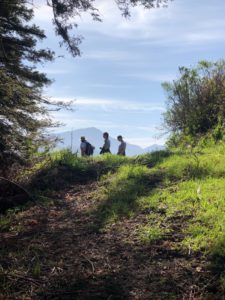
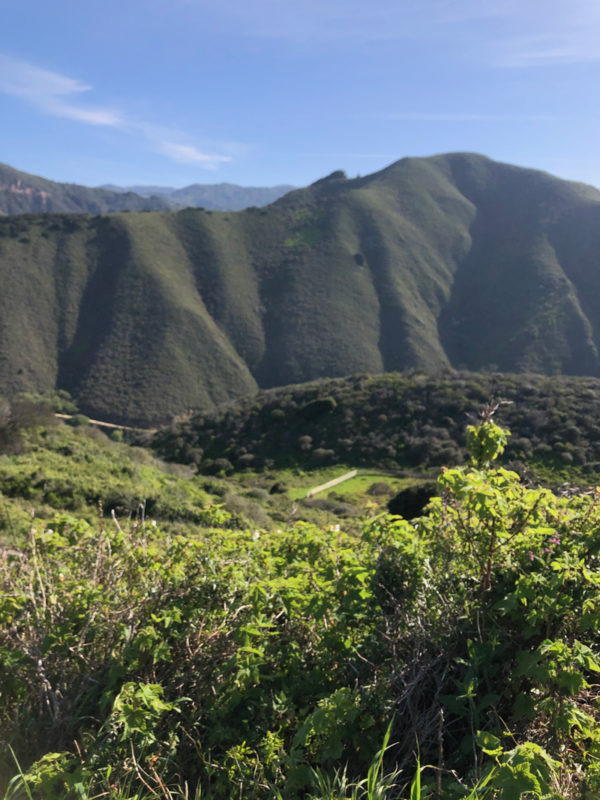
Looking at Pico Blanco in the distance.
Covid isn’t anywhere near over, I know, but we had an almost normal day this past Sunday. Trent is from Florida and Yarrow had arrived from Colorado, so we wanted to show them a little bit of California besides the shed and field here at home. So we took them to Big Sur for a hike up Serra Hill in the Los Padres National Forest, just south of the Bixby Creek Bridge. It’s a beautiful drive any time of year, but we were treated to a gorgeous sunny spring day with green grass, wildflowers and wild strawberries. Heading south of Carmel I always make a game of calling out the names of the creeks to myself before I cross the bridges and culverts, just for fun; “Rio Carmelo, Wildcat, Malpaso, Garrapata, Rocky, Granite, Bixby, Little Sur, Big Sur….Bixby Creek has a fame all out of proportion to the amount of water it conveys to the Pacific due to the graceful and photogenic arch of the bridge that spans its gorge. But for me, especially now during this pandemic, it’s Garrapata Creek that means the most to me.
When I was kid I spent a lot of time with my neighbor, Jimmy, a cattle rancher in upper Carmel Valley. Jimmy was a real old-timer, and he’d had a job as a mule driver on the grading teams that carved Highway One down the Big Sur Coast back in the 1930s. But as a child he’d grown up in a fisherman’s shack just off Monterey’s Cannery Row. When the 1918 flu pandemic hit Monterey Jimmy’s mother feared for his life, so she dispatched him to live in a healthier atmosphere with his Uncle Harvey. Talk about “social isolation!” Uncle Harvey had a remote homestead/ranch way up Garrapata Creek, accessible only on foot or horseback. Harvey was a near hermit, just minding his own business and cattle, choosing only to work as a cowboy on neighboring ranches when he needed a little cash. Jimmy spent several years growing up there in the redwood forests of upper Garrapata and he had a lot of crazy stories to tell about his experiences. When the pandemic ended he returned to Monterey and got schooled, but it’s fair to say he got his education in the Santa Lucia Mountains. Standing on top of Serra Hill with Starr, Yarrow and Trent, and looking into the interior of the Little Sur backcountry, I was thinking about Jimmy and his stories with an understanding that I didn’t have when I was a kid and didn’t know the contours of a pandemic.
So where to go from here?
I don’t think anyone can really know what’s going to happen next. We’re still taking the pandemic seriously, but we’re also planting as though life will open up. Farming always demands lots of forethought, because crops take “real” time to germinate and grow. We’ve picked the first handful of artichokes and the sun will bring the crop on fast now. The first basil has sprouted in the greenhouse, the tomatoes will get planted out this week, and the potato crop is already a few inches high. The squash crop goes into the ground as soon as the field is worked up and the beans and corn follow as soon as the soil warms up. Thank you for your support; we appreciate it.
© 2021 Essay by Andy Griffin.
Photos by Starling Linden. Top photo is looking back at the Santa Lucia Mountains.

 Copyright © 2023 Mariquita Farm. All Right Reserved.