

Knock On Wood

Our head cat, Samson, reviewing the work we did planting out a rainbow of different basil varieties.

Hi Folks: I’m happy to say that the 2026 season tomato crop is looking good. Knock on wood. We expect the first harvests to take place in the first week of July. All told, we have several successive waves of each kind of tomato planted out in the field now so we’re hoping to be in production from early July through late October.

The tomato crop is looking great! These are the Dry Farmed Early Girls
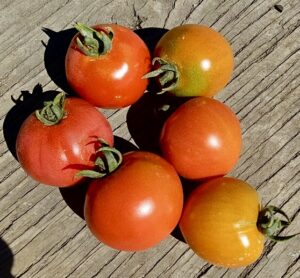
Here’s the first handful of 2026 tomatoes. A big field only yielded these 6 fruits but a big crop is coming.
One of the first hurdles for a successful crop to clear is always the winter greenhouse stage of production. We always aim to get the first tomato seeds sowed into the transplant trays in early February. February can be a hard time of year for the birds, so if they can figure out a way to get into the warm greenhouse they may peck the seeds right out of the little cells in the trays where they’ve been sown before they even germinate and later on they can eat the tiny plants. The same goes for field mice. But this year none of those disasters befell us. Plus, the neighbor’s old, scruffy cat found the greenhouse to be a warm and inviting environment to relax in and he kept a watchful eye on production when he wasn’t snoozing.
Greenhouses are warm and humid, which encourages rapid plant growth but that same damp heat can foster mildews and other fungal problems. From day to night fungus can wipe out a crop in an enclosed space, like a greenhouse. We used to book our transplants with a large organic greenhouse operation, figuring that they could do a better job than us, and we’d pick up the plants all ready to go. We figured that the expense was worth the security of knowing that trained professionals were overseeing our crop when it was at its most vulnerable stage. But even the pros have problems and one year they lost- not just our crop, but thousands of trays of other farms’ tomato transplants in an outbreak of blight. We had some trays planted in our own greenhouse and didn’t have a problem, so now I figure I’ll live with the worry and count on dumb luck and an old cat to guide our tender transplants through their first months of life.
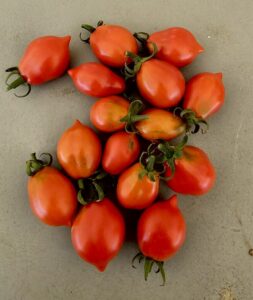
This photo of last year’s Piennolo crop has me looking forward to this year’s fruit.
You’ll recall that this past March was unseasonably warm. While warm winter temps can create havoc for farms that grow crops that have a chill requirement like cherries which need 800 to 1200 hours below 40 degrees Fahrenheit during dormancy for an adequate bloom to set, tomatoes are a tropical plant by nature and they resent being cold. Our neighbors who grow cherries have problems this year with the bloom set, but our tomatoes grew fast and healthy in the greenhouse. The warmer winter also helped us prepare the fields well. We got rain when we needed it this year and we got dry spells when we needed them. Dumb luck again, but dumb luck is better than no luck, and we got the cover crop worked under and spread compost on the fields six weeks earlier than usual.
We used to figure that April 15th was the frost-free date here on the Central Coast. By “We” I mean the farmers in the area who, by necessity, pay close attention to frost patterns. I can remember planting tomatoes out on April 15th back in the 1990s, only to have a damaging frost on the night of April 17th, so the “frost free date” was only a practical guideline, not a law of nature. But this year the fields were ready early, the tomatoes were ready to plant early, so we gambled that our luck would hold and we got the plants in the ground in late March. Our luck held. I’m not a gambler, which is to say I don’t go to Vegas and play the slots, and I don’t even buy lottery cards, but I have no right to criticize gamblers on moral grounds since so much of farming boils down to luck and every planting is a gamble. Maybe after all the risks I take farming I simply have no appetite for more risk when I’m on vacation.
So our plants were set out early and then a series of gentle rains helped nurture the little seedlings as they established their footing in their new home. The summer weeds all sprouted just when the soil temperature rose to the point that they were waiting for, just like they always do, but we were ready with our tractors. True, the war against Iran and the subsequent rise in diesel fuel prices is making farming more costly than ever, but you’re feeling that pain too. We bought the $7 dollar a gallon diesel for our tractors and got the cultivation done on time. With dry-farmed tomatoes cultivation is really key. We bank on the water in the soil to sustain our crop through production, and cultivation helps that happen. It’s not just that removing the weeds keeps them from drinking up the water our tomatoes will need. As soil dries out under the sun and wind the mechanics of evaporation create little capillary-like structure in the soil. Cultivating the soil surface shatters those capillaries where they meet the air and acts to help retain residual moisture in the soil. This is called a “dust mulch.”
If March was warmer than usual then April and May were often cooler than typical, but the tomatoes did well anyway and they created big canopies of greens. The plants flowered well. Because we farm in that region we call “The Bolsa,” east of Gilroy and north of San Juan, near where Pacheco Creek meets the Pajaro River, we can count on a strong breeze every afternoon as warm air rising in the San Joaquin Valley pulls in cool marine air over the Pacheco Pass. Tomatoes are wind pollinated, so we’ve got that angle covered. The tomato plants in the first of our three successive plantings are loaded with green fruit. The Cherry Tomatoes and Early Girls will come first, followed by the Heirloom varieties, then the San Marzanos and finally the Piennolo.
There’s still plenty of time for complications and drama but like the gambler on a lucky streak I know it will all work out. Yes, carton costs are way up. Yes, the availability of labor is way down. And yes, the weather forecast is calling for a Godzilla El Nino effect, with whatever that entails, but I feel like we’re on a lucky streak too and I look forward to sharing a great crop with you this summer and fall. Can you hear me knocking?
Meanwhile, back on the ranch….We’ve got the last two of our “Five Senses Workshops” that will be happening on the Farm. Saturday, July 11th, our workshop will be about our sense of smell – our “sense of scents,” if you will, focusing on lavender and other aromatic herbs. Have you ever smelled Huacatay? Nepitella? Lovage?
Then on Saturday, August 8th, our last workshop that focuses on seeing. It’ll be a beautiful day and Starr will be making bouquets with people from the flowers we grow. Also, she informs me that there will be “mini facials” offered. Lastly, now that I can see our harvest taking shape I’ll be reaching out to our past pop-up hosts to see if we can “pop up” again to offer this year’s harvest of tomatoes, herbs, flowers, citrus, and other veggies. Keep an eye on the newsletter and we hope to see you soon. Thanks, Andy & Starr.
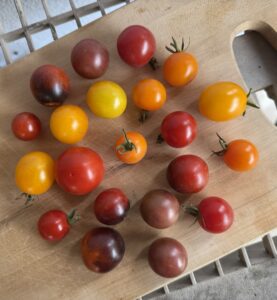
A rainbow of cherry tomatoes
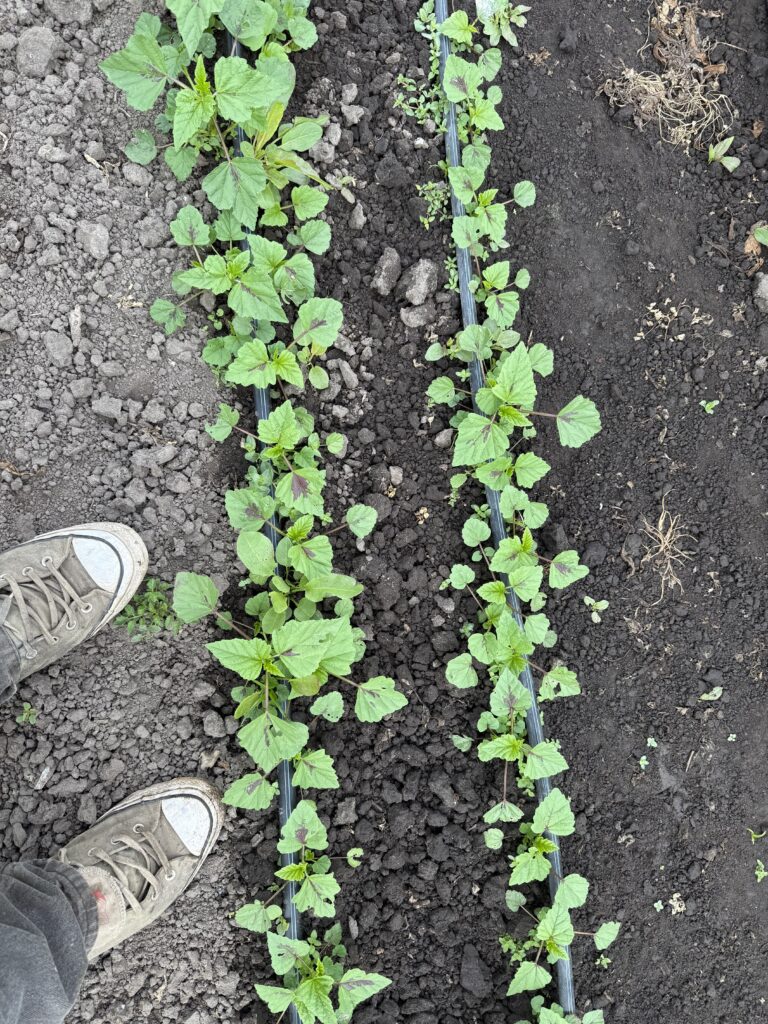
This is a fun experiment; here’s a foot-selfie (for scale( to show you a Mexican pot herb or “quelite” called Alache that we are growing for the local Oaxacan shoppers. It’s used to thicken soups and stews and acts the way that okra does to gumbo. Both okra and alache are in the Malvaceae.
.
|
|

 Copyright © 2023 Mariquita Farm. All Right Reserved.